Heat Cable Installation in Logan, UT
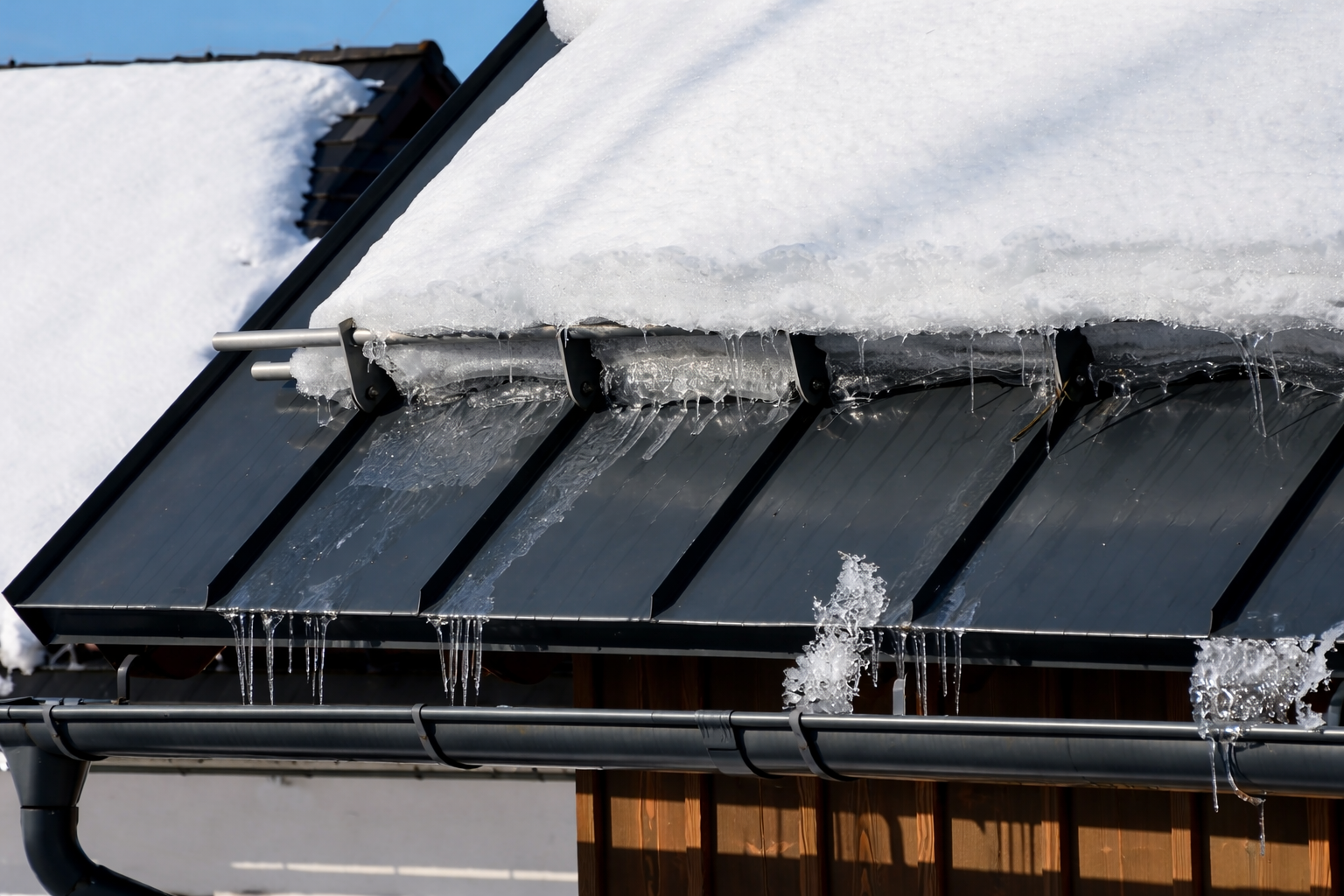
Drive Logan's older streets in January and you can read every roof's heat cable story from the curb: the zigzag that ends before the trouble spot, the sagging runs stapled up by a previous owner, the cable that quit two winters ago and never got replaced, and, here and there, a system that's actually routed right and doing its quiet job. Heat cable has a mixed reputation in this valley for one reason: most of it was the wrong product, in the wrong pattern, on the wrong roof.
The Cache Valley Roofing position is unusually honest for a company that sells the service: cable is the second-best fix for ice dams. The best fix is a sealed, insulated, ventilated attic, and if that's what your roof needs, we'll say so and point you to that page. But some roofs have geometry no attic fix can reach: dead valleys behind dormers on the historic blocks, north eaves under the mature trees on Center Street, tight cathedral ceilings with no attic to fix, and rentals where the attic project isn't happening mid-lease. There, properly specced and routed cable is the right tool, and this page is what "properly" means.
Get My Free Heat Cable Assessment
Do Heat Cables Work for Ice Dams?
Yes, when three things are true, and disappointingly when they're not:
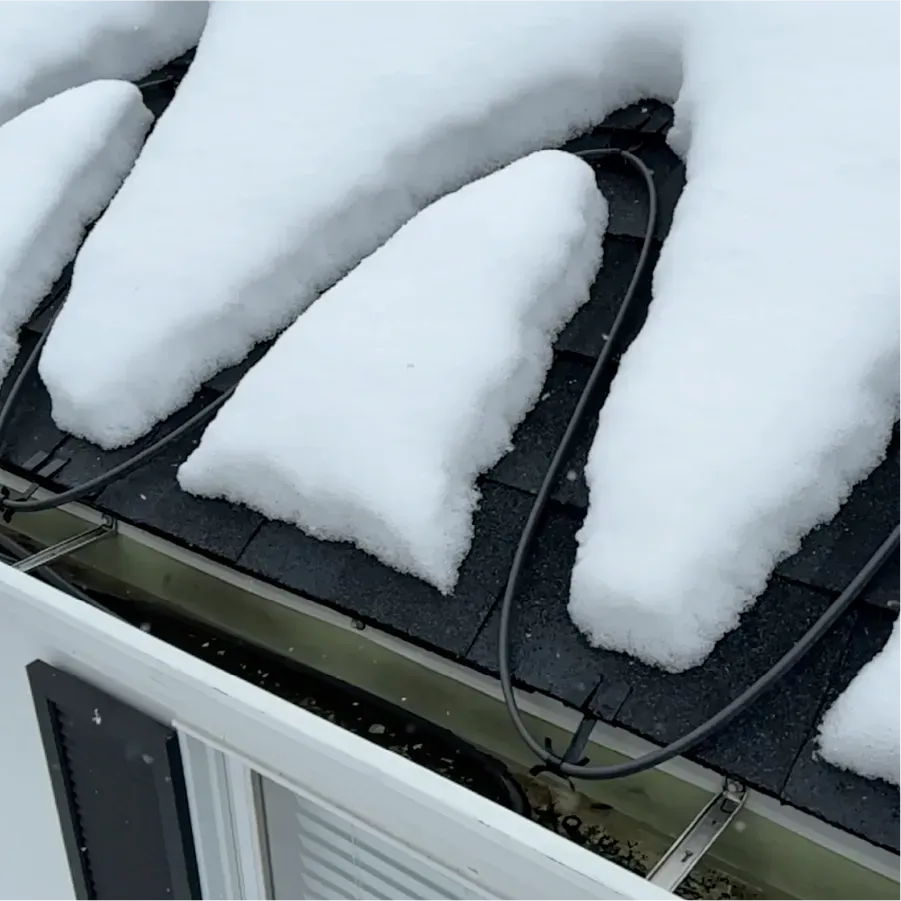
1. The right cable. Self-regulating cable adjusts its heat output along every inch of its length as temperatures change. It can be safely overlapped, run into gutters and downspouts, and left energized without cooking itself. The constant-wattage cable sold in box-store kits puts out fixed heat everywhere, fails where it overlaps, and burns out on a 3-to-5-year cycle, which is where most of the valley's dead zigzags came from. We install commercial-grade self-regulating cable (nVent Raychem and comparable lines) rated for 10+ year service.
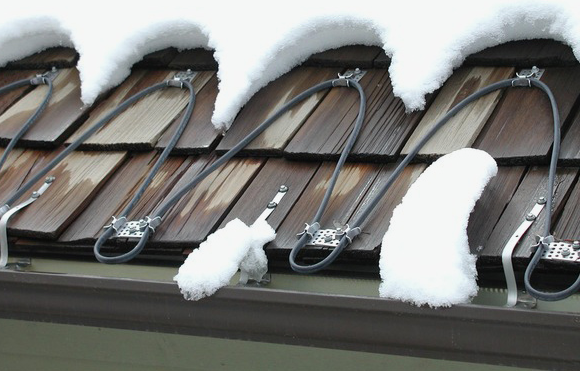
2. The right pattern. Cable that stops at the eave zigzag melts channels that refreeze in the gutter and build the dam one level down. A working layout runs the eave zone, continues through the gutter, and drops a loop down every downspout to daylight, so meltwater has an open path completely off the roof. Valleys and dead valleys get their own dedicated runs.
3. The right control. Cable on a manual switch either runs all winter (the power bill nobody warned you about) or sits off during the storm that mattered. A moisture-plus-temperature controller energizes the system only when it's cold and there's precipitation to manage, which typically cuts operating hours by well over half compared to switch-and-forget [CONFIRM claim wording]. Wi-Fi controllers add remote status for the rental owners who can't see the roof from where they live.
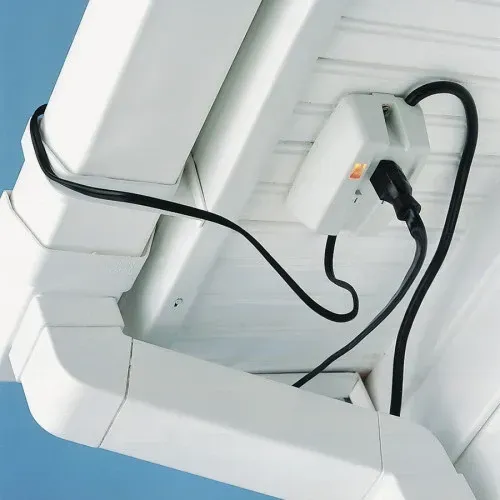
All of it goes on a dedicated GFCI-protected circuit, per code and per common sense
Heat Cable Services We Offer
New Heat Cable Installation
Assessment of where your ice actually forms, self-regulating cable in eave, valley, gutter, and downspout runs, mounted with proper clips (never staples, which pierce cable jackets and shingles alike), on a dedicated protected circuit with the controller that fits how you live.

Dead Valley & Heat Cable Problem Spot Treatment
The dormered rooflines of Logan's historic districts create shaded pockets that hold ice all winter. Targeted runs in just those zones cost a fraction of a whole-roof system and solve the actual problem.
Failed Heat Cable System Replacement
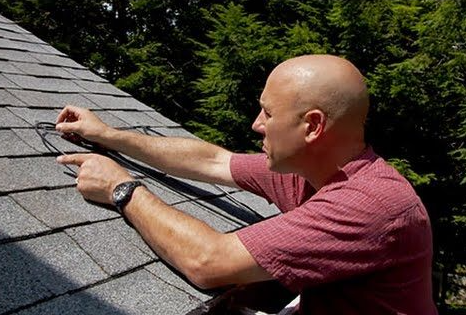
Dead box-store cable stripped off, mounting damage repaired, and a properly specced system in its place. The most common heat cable call we get.

Self-Regulating vs. Constant-Wattage Heat Cable
The most common heat cable call we take is replacing failed box-store cable: burnout, overlap failure, or a staple through the jacket.
The box-store kit is cheaper exactly once. By the second replacement, plus the Februaries it failed mid-season, the professional system has won the math, which is why our replacement-of-failed-cable service exists in the volume it does.
What Heat Cable Costs in Logan
Typical Cache Valley market ranges; estimates only. Operating cost depends on cable footage, controller, and the winter itself; your quote includes a written estimate of realistic power draw.
Operating cost depends on cable footage, controller, and the winter itself; we'll estimate your system's realistic power draw in writing before you commit, because a system you're afraid to turn on protects nothing.
"Heat cable has two price tags: the one on this chart and the one on your power bill. A real quote shows you both."
Our Heat Cable Installation Process
01
Free Assessment
We look at where your ice actually forms (bring photos from last winter if you have them; the ice never lies), check the attic side to make sure cable is the right prescription at all, and map the circuit path.
02
Straight Answer
Written quote with cable footage, controller option, and electrical scope itemized. If the honest answer is "fix your attic instead and skip the cable," the quote says that in writing.
03
The Install
One day for most homes, September through November being the smart window. Clip-mounted runs, gutter and downspout loops to daylight, dedicated protected circuit, controller commissioned and explained.
04
First-Storm Check
After the first real snow, the system either shows melt channels and clear downspouts or we come back and adjust the routing. The photos from that first storm are the system's report card, and you get them.
Why Choose Cache Valley Roofing for Heat Cable
We'll talk you out of it when it's wrong
Cable on a leaky attic is a power bill impersonating a solution. Our assessment starts in the attic, and a meaningful share of assessments end with us recommending insulation work instead of our own cable install.
Roofers doing the mounting
Cable clips done wrong pierce shingles and void warranties; staple jobs do it faster. Every fastener we place is placed by someone who thinks about the roof first.
Systems, with report cards
Commercial-grade cable, real controllers, a dedicated circuit, and a first-storm follow-up with photos. Very few in the valley close the loop on whether the install actually work.
Heat Cable FAQS
Ice Season Is Booked in October
Install season runs September to November, and the first hard freeze fills our calendar overnight. One free assessment tells you whether cable is your answer, and what the right system costs.
Or Call: 801-880-2885