Storm & Wind Damage Roof Repair in Logan, UT
Cache Valley gets its worst wind the way it gets everything else, funneled through terrain. Gusts accelerate down out of Logan Canyon and over the Sardine Canyon summit, spill off the Wellsville and Bear River ranges, and hit the bench neighborhoods first and hardest. A single spring windstorm can lift a hundred shingles a quarter inch, reseal none of them, and leave a roof that looks perfectly normal from the driveway and fails quietly for the next three years. Add summer thunderstorm hail, heavy wet snow, and the cottonwood limbs that come down across the older streets, and the valley produces a specific kind of damage that needs to be documented before it can be argued about.
Cache Valley Roofing does the documenting. Dated photos tied to locations, a written scope, and an honest read on the part most contractors won't say out loud: whether what we found is storm damage your policy covers or ordinary wear it doesn't. We'll run the deductible math with you before you file anything, because a claim that shouldn't have been filed costs you money and stays on your record.
Get Your Free Storm Damage Inspection
What to Do After a Storm Damages Your Roof
List of Services
-
1. Check for hazards before anything elseList Item 1
Downed power lines, water near electrical panels or fixtures, and limbs hung up in trees or on the roof. Stay off the roof entirely, and off ladders if the ground is soft or icy.
-
2. Contain water insideList Item 2
Buckets, towels, plastic over furniture, and a small hole through the center of any bulging ceiling to drain it safely. Power off to any wet fixture. Full guidance on our roof repair page.
-
3. Photograph everything today, while the date is unambiguousList Item 3
Wide shots of the whole house from each side, then close-ups. Include the ground: shingles in the yard, granules washed into the driveway, dented gutters or downspouts, broken vent covers, debris. Then photograph every interior stain, ceiling, and wall. Your phone timestamps all of it, which is the point.
-
4. Write down the date and time of the stormList Item 4
Not "sometime last week." Claims connect damage to a specific weather event, and weather records for that date get referenced later.
-
5. Make reasonable temporary repairs and keep every receipt
Where it's coming in, when it started, what the weather was doing. It matters for insurance and it helps us trace the source.
-
6. Don't throw the evidence away
Blown shingles in the yard, a hail-dented gutter section, a cracked vent cover. Bag it and set it aside until after the adjuster's visit.
-
7. Get a documented inspection before you call your insurer
Knowing what the damage is and what it costs to fix turns filing into a decision instead of a guess. Ours is free and yours to keep either way.
-
8. Sign nothing at your door
Not an Assignment of Benefits, not a contingency agreement, not "just paperwork so we can inspect." More on that below.
What Wind Damage Actually Looks Like
Most valley wind damage is invisible from the ground, which is exactly why it goes unclaimed until it's uninsurable wear:
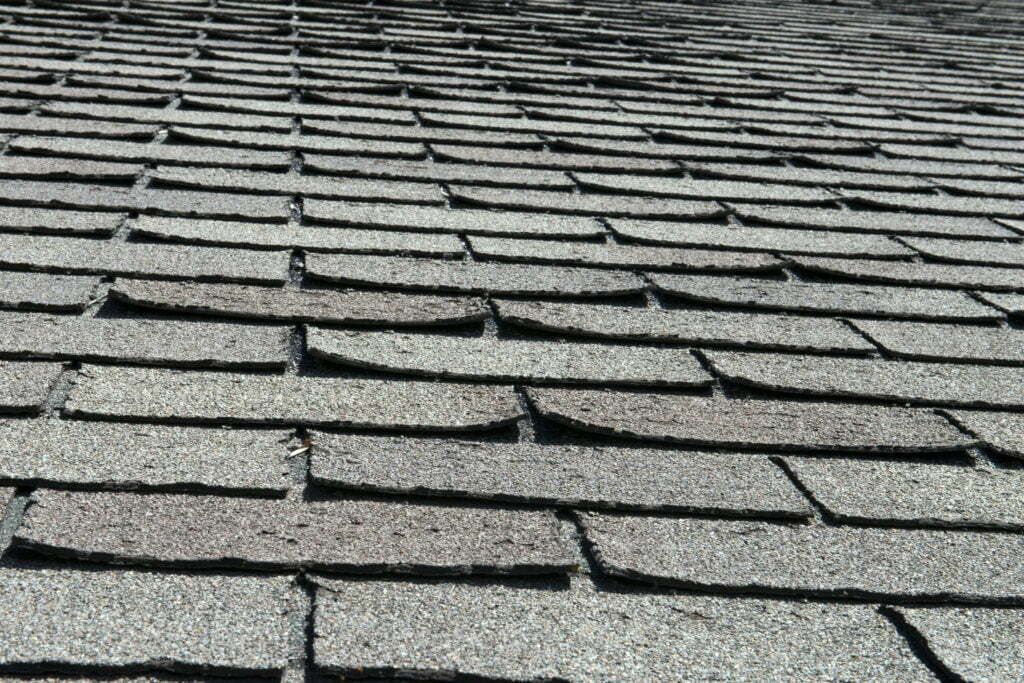
- Creased shingles. The tab lifted, flexed, and laid back down with a fracture line across it. It looks fine from the street and it will never reseal. This is the most common and most missed wind damage in Cache Valley.
- Broken seal bonds. The adhesive strip let go without visibly moving the shingle. The next gust works it further, and the one after that takes it.
- Missing tabs and full shingles, usually starting at rakes, ridges, and the windward corner of the roof.
- Peeled or displaced ridge caps, the first casualty on bench homes at the canyon mouths.
- Lifted or bent drip edge and flashing, particularly on rake edges facing the canyon.
- Granule loss in concentrated patches from wind-driven debris or hail, distinct from the even, gradual loss of age.
- Hail bruising. Soft dark spots where the mat is fractured under the granules. You often can't see it, you feel it. Utah hail is usually a summer thunderstorm event and the damage pattern is directional.
- Impact damage from limbs, which on Logan's tree-lined historic streets is a category of its own.
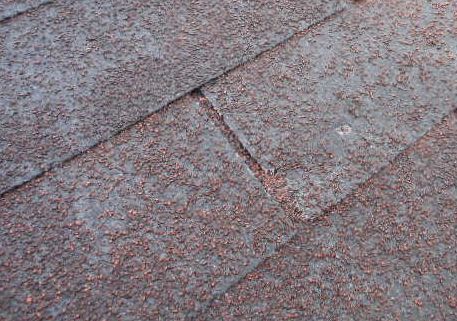
Granule Loss
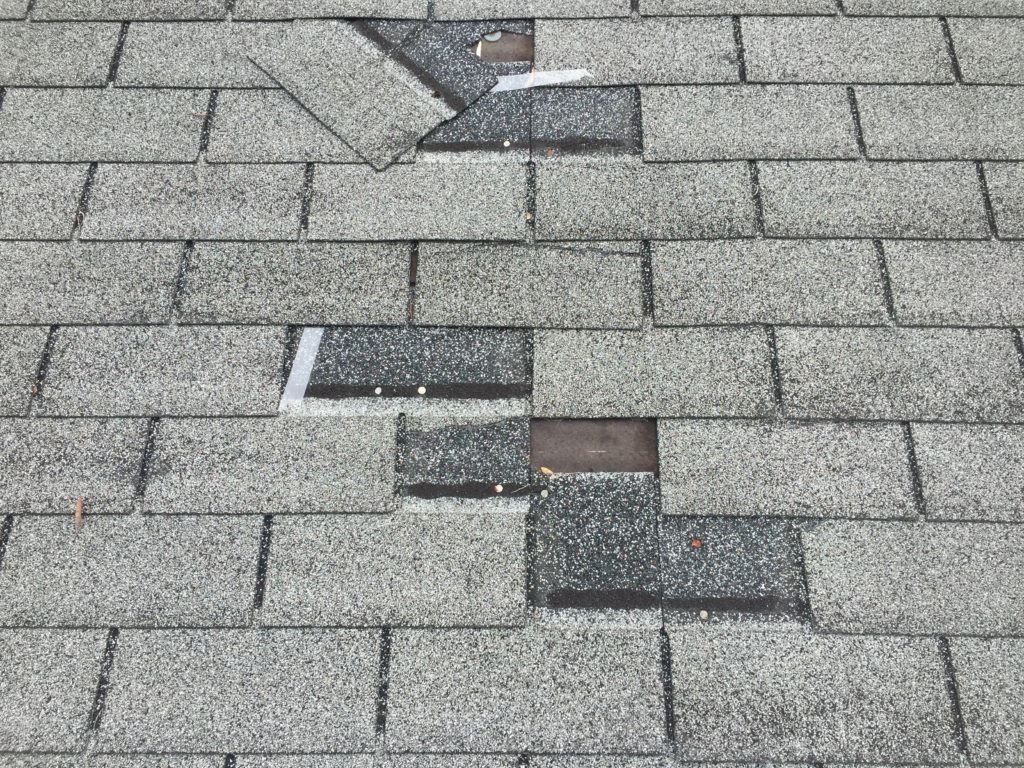
Missing Shingles
Lifted Shingles

Hail Damage
Does Homeowners Insurance Cover Roof Storm Damage?
The short version: policies cover sudden events, not gradual wear. Wind, hail, falling limbs, and snow-load collapse are typically covered perils. A twenty-year-old roof reaching the end of its life is not, no matter how bad it looks after a storm.
The gray zone is where the money is, and it's why documentation matters:
- Date the event. A claim connects damage to a specific storm on a specific date. Photos taken after that date, with the damage pattern consistent with wind direction, are what an adjuster is looking for. If you never documented, you're arguing from memory.
- ACV vs. RCV. Actual Cash Value policies pay depreciated value, so a fifteen-year-old roof pays out fifteen years depreciated. Replacement Cost Value policies pay to replace, usually in two checks: an initial ACV payment, then the recoverable depreciation once the work is done and invoiced. Knowing which you have before a storm changes what a claim is worth. Most people don't know, and it's one line on your declarations page.
- Deductible math. Valley deductibles commonly run $1,000 to $2,500, and some policies carry percentage-of-dwelling-value wind or hail deductibles that are much larger. If your damage is $1,800 and your deductible is $2,500, filing costs you money and puts a claim on your history for nothing.
- Roof age and schedules. Some carriers apply roof depreciation schedules or surface payment schedules on older roofs. Worth reading before you assume a full replacement is coming.
- Filing deadlines. Policies carry notice requirements, and waiting a season to report a spring storm invites a denial
Where we sit in this: we're your roofer, not your adjuster and not your attorney. We document what we find, give you a written scope and estimate an adjuster can read (our estimates are structured to line up with the way carrier software itemizes work), meet the adjuster on the roof when you'd like us there, and tell you honestly when we think a claim isn't worth filing. If you need someone to represent you against your carrier, that's a licensed public adjuster's job, not a roofer's, and any contractor who blurs that line is telling you something about how they operate.
How Long Does a Roof Insurance Claim Take?
Most Cache Valley claims run four to ten weeks from the storm to the final check, and knowing the sequence keeps you from worrying at the wrong stage:
1. You report the claim (day 0 to 2). Call your carrier or agent with the storm date and a short description. You'll get a claim number and an adjuster assignment.
2. The adjuster inspects (roughly 3 to 14 days). Longer after a widespread wind event, when carriers pull adjusters across the whole region and the queue backs up. We'll meet your adjuster on the roof if you want us there, which is usually worth an hour of everyone's time.
3. Scope reconciliation (1 to 3 weeks). The adjuster writes a scope, we compare it to what the roof actually needs, and any difference gets documented as a supplement with photos and measurements. This is the stage where having a real inspection report matters most, and it's the stage most homeowners don't know exists.
4. Approval and first payment. On a Replacement Cost Value policy you receive the actual cash value first, with the recoverable depreciation held back. On an Actual Cash Value policy, what you receive is what you get. Your deductible is your out-of-pocket, and you pay it to the contractor, not the insurer.
5. Scheduling the work. Weather governs this in Cache Valley. October and November book solid as everyone races the first snow, and a claim approved in December may reasonably wait for a spring window unless the roof needs emergency work now.
6. Completion and final invoice. Work finished, completion photos taken, final invoice submitted to your carrier.
7. Recoverable depreciation released. On an RCV policy the remaining balance comes after the work is documented as complete. This is the money people leave on the table when a storm-chaser crew disappears before the paperwork closes.
Storm Damage Services We Offer
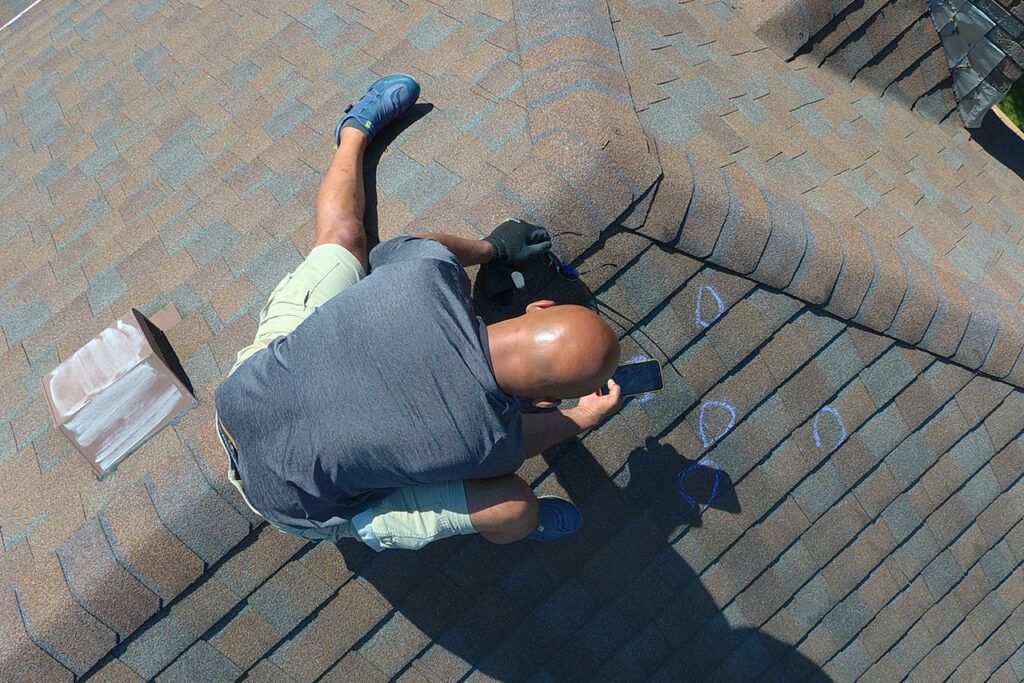
Documented Storm Damage Inspections
Full roof and attic walk with dated, location-tagged photos, damage mapped by slope and wind direction, and a written summary in plain language. Free, and the report is yours whether you file, hire us, or do nothing.
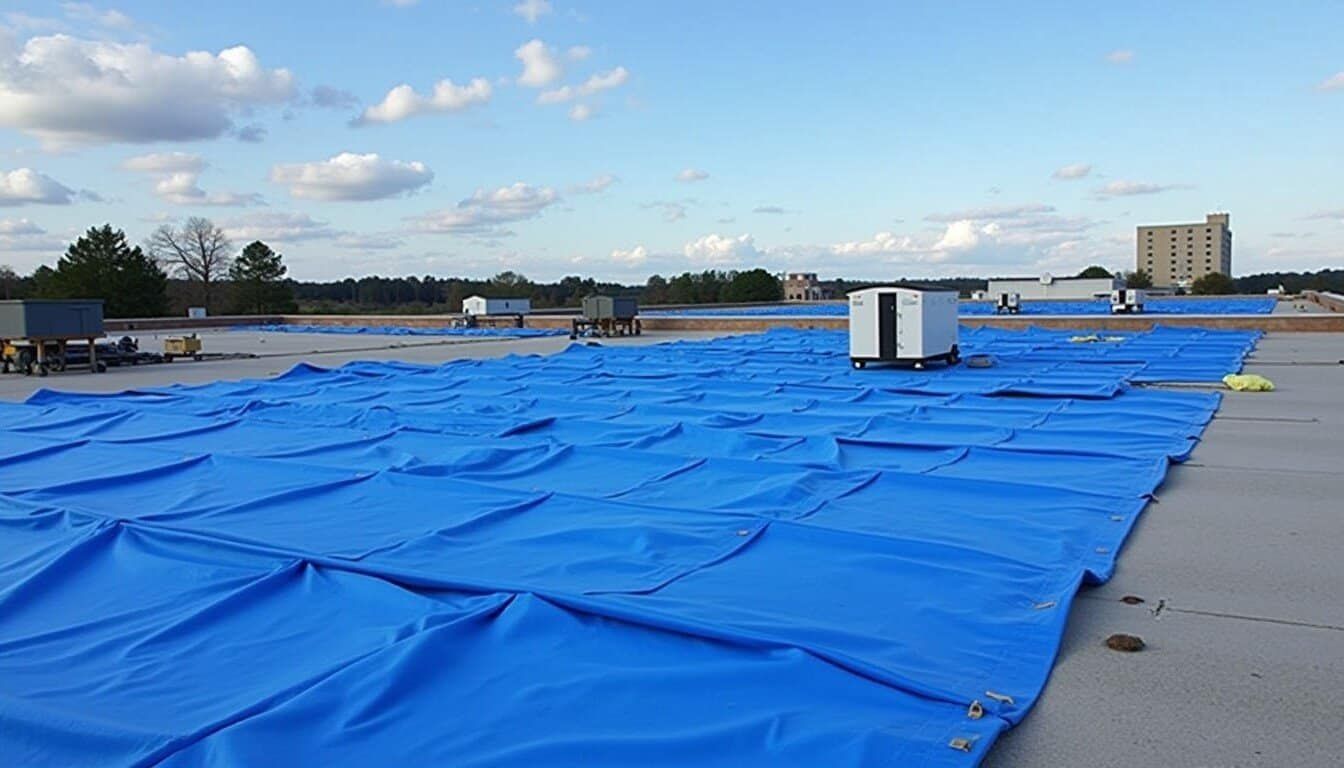
Emergency Tarping and Dry-In
Reinforced poly anchored to sound framing, or peel-and-stick membrane dry-in for larger openings, built to hold through the next storm cycle rather than overnight. Emergency rates apply to the emergency visit only.

Wind Damage Repair
Creased and lifted shingle replacement, ridge cap rebuild, drip edge and flashing correction, hand-sealed when temperatures are below the reseal threshold.




How to Spot a Storm Chaser
After any significant wind event in Cache Valley, out-of-state crews arrive. Some are competent. The business model, though, is volume and speed, and they will be in another state next spring when your workmanship question comes up. Real warning signs:
- They knock on your door first. Legitimate local contractors are usually booked solid after a storm and don't need to canvass neighborhoods.
- They want a signature today, especially an Assignment of Benefits or a "contingency agreement" that hands them control of your claim. Never sign anything that assigns your insurance rights on a doorstep.
- They promise the whole roof is covered before anyone has been on it. Coverage is decided by your policy and your adjuster, never by a salesman's confidence.
- They offer to "cover" or "eat" your deductible. In addition to being a red flag about everything else, insurance fraud is not a favor.
- No Utah license, no local address, no local reviews. Utah contractor licenses are verifiable through the Division of Occupational and Professional Licensing (DOPL), and it takes two minutes. Ask for the license number, the physical Utah address, and proof of general liability and workers' comp.
- Pressure about a "limited crew window." The roof that survived the storm will survive a week of due diligence.
We're not going anywhere. Our address is in the valley, we're here in February when the same roof needs something, and the warranty is worth what the company standing behind it is worth.
Storm Repair Costs in Logan
Typical Cache Valley market ranges; estimates only. If a claim is involved, your out-of-pocket is usually your deductible rather than these numbers, which is why the deductible conversation happens before you file.
If a claim is involved, your out-of-pocket is usually your deductible rather than these numbers, which is exactly why the deductible math conversation happens before you file and not after.
Get your damage documented →
"If a claim is involved, none of these numbers are your number. Your deductible is."
Our Storm Damage Process
01
Document and Stabilize
If water is getting in, stabilization comes first: tarp or dry-in, photographed. Then the full documented inspection with dated images by slope.
02
The Honest Read
We separate event damage from wear in writing, run the deductible numbers with you, and tell you plainly whether we'd file this claim if it were our house.
03
Your Call, Supported
File or pay out of pocket, either way you get the same scope and estimate. If you file, we'll meet your adjuster on the roof and provide supplement documentation if the initial scope falls short of what the roof needs.
04
Repair and Close the File
Work completed, completion photos delivered, and the documentation package archived so your next conversation with an insurer or a buyer starts from evidence.
Why Logan Homeowners Call Us After Storms
We tell you when not to file
A claim below or near your deductible costs money and stays on your record. That advice loses us the occasional job and earns the referrals that replace it.
Documentation built for a claim file
Dated, location-tagged photos and itemized scopes that an adjuster can actually work from, rather than a one-page total that invites a fight.
Here after the storm season
Storm chasers optimize for the ninety days after an event. Our warranty is only as good as the company standing behind it, and ours has a Cache Valley address year-round.
Storm & Wind Damage FAQs
Document It While the Date Still Matters
The window to connect damage to the storm that caused it closes fast. Free inspection, dated photos, honest answer, and a straight conversation about whether a claim makes sense.
Or Call: 801-880-2885