Roofing in Smithfield, Utah
Smithfield has been a north-valley town since 1859, and it still reads that way from the roofline. The older core around Main Street holds brick homes and steep-pitched farmhouses from an era when the roof was expected to shed a hard winter on its own, along with the kind of civic and commercial buildings that anchor a town with a century-plus of continuous main street. East and above that, the bench has filled in fast, with subdivisions climbing toward Smithfield and Birch canyons and a school-age population that keeps Sky View busy. Same town, two roofing conversations.
Cache Valley Roofing repairs and replaces roofs across Smithfield, from the brick homes and steep-pitched farmhouses near Main Street to the newer subdivisions filling in the east bench. Every job starts with a free inspection and photos of what we find, and given where you live, checking how far your ice barrier actually runs at the eaves isn't an upsell we tacked on. It's just what inspecting a Smithfield roof means.
Get Free Smithfield Roof Inspection
Roofs in Smithfield: A Harder Winter Than the South End
The north-valley factor. Cache Valley is not one climate, and Smithfield sits at the colder end of it. Storms coming down the valley tend to give the north end more accumulation and a longer season than Logan or the towns south of it, and the difference shows up in the details rather than the headlines: pack sitting longer on north slopes, more freeze-thaw passes at flashings, and eaves that stay frozen well after the sun has cleared the rest of the roof. It's also why we run ice-and-water shield further up the slope here than a code-minimum install would, and why heat cable in dead valleys is a more common recommendation in Smithfield than it is at the south end of the valley.
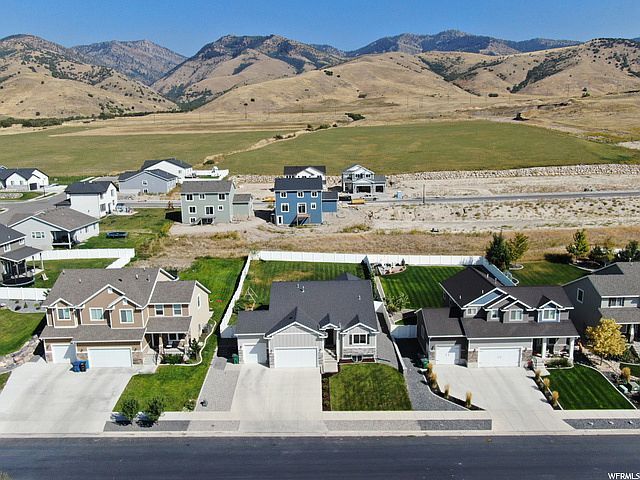
Two eras of housing. In the older core around Main Street, the roofs are what you'd expect from a town settled before the transcontinental railroad reached Utah: steep pitches, plank decking, multiple re-covers, chimneys that predate modern flashing practice, and outbuildings that came with the lot. Those need a roofer who inspects before quoting and prices decking per sheet in advance. On the east bench, the story is newer and simpler: subdivisions built through the 1990s, 2000s, and 2010s with builder-grade materials and minimum-spec attic ventilation, now old enough that the first ones are reaching replacement while the newest are just starting to show ventilation problems as ice at the eaves.
What Smithfield Roofs Are Up Against
A longer snow season than the south valley. More accumulation, later melt, and north slopes that stay loaded well into spring.
Canyon wind off Smithfield and Birch canyons. East-side homes take the gusts first, which shows up as creased shingles and lost ridge caps.
Freeze-thaw at flashings. Chimneys, sidewalls, and pipe boots on the older core cycle through freezing constantly and open up on a predictable schedule.
Ice dams on both housing eras. Older homes leak attic heat through unsealed chases; newer homes were vented to the minimum. Different causes, same eave.
Outbuildings that get forgotten. Shops, sheds, and small barns on the older lots carry snow load nobody checks until something sags.
Roofing Services in Smithfield
List of Services
-
Roof Replacement
Tear-offs with ice-and-water run past code minimum, for older core homes and bench subdivisions alike.
-
Roof RepairList Item 1
Flashing rebuilds, melt-season leak tracing, and the careful work older Main Street homes deserve.
-
Ice Dam Removal & PreventionList Item 3
Steam removal plus the attic corrections that keep north-valley eaves from rebuilding the dam every January
-
Roof Snow RemovalList Item 4
Load reduction for homes, shops, and outbuildings after the wet storms that stack on a deep base.
-
Metal Roofing
Standing seam and panel systems that shed north-valley snow, with retention placed where it needs to stay put.
Smithfield Roofing Questions
Farther north still: Richmond, where the valley gets colder, the dairies start, and barn roofs are as much of the work as houses.
An Honest Look at Your Smithfield Roof
Whether it's an 1890s home near Main Street or a bench house on its first roofing decision, it starts free: an inspection, photos, and honesty.
Or Call: 801-880-2885