Roof Repair in Logan, Utah
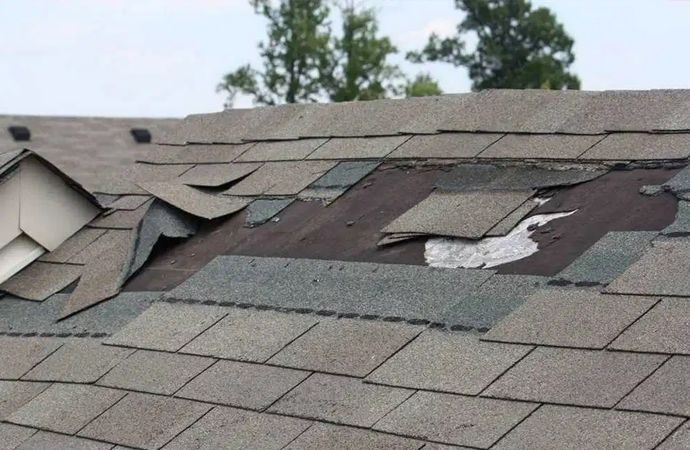
Half the roof repair calls in this valley come in two waves. The first hits in April, when the snowpack finally releases and every homeowner in Logan finds out at once what January actually did up there. The second follows the big wind events, when gusts accelerating out of Logan and Sardine canyons lift shingle edges, peel ridge caps, and drop tree limbs across the benches. In between, freeze-thaw does its quiet year-round work: cracking flashing seams, splitting pipe boots, and backing out fasteners a millimeter at a time.
We repair all of it, and we welcome the small jobs most contractors won't return calls for. A cracked pipe boot is a $300 fix in September and a soaked ceiling in February; catching it early is the whole game. Every repair starts with tracing the leak to its actual entry point rather than patching the stain, because water in a Cache Valley attic travels along rafters and insulation before it ever shows its face, and repairing where the drip lands fixes nothing.
Get Your Free Roof Repair Estimate
What to Do When Your Roof Is Leaking
List of Services
-
1. Contain the waterList Item 1
Buckets under drips, towels at the edges, plastic over furniture.
-
2. Relieve a bulging ceilingList Item 2
A water-filled drywall bulge gets a small screwdriver hole and a bucket underneath. It feels wrong and prevents a collapse.
-
3. Kill power to wet fixturesList Item 3
If water is anywhere near a ceiling light, fan, or the furnace closet, flip that breaker.
-
4. Stay off the roofList Item 4
A snowy or iced roof is not a homeowner project, full stop. Interior containment is safe; the ladder is not.
-
5. Photograph everything with timestamps
Where it's coming in, when it started, what the weather was doing. It matters for insurance and it helps us trace the source.
Roof Repair Services We Offer
Leak Tracing & Repair
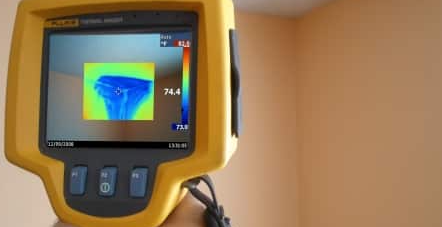
We follow water uphill from the stain to the entry point: attic-side inspection, moisture-meter readings, and a fix at the source. Water can travel ten feet or more along a rafter before it drops, which is why the stain and the leak are almost never in the same place, and why the patch someone smeared over the stain didn't hold. The number-one call in the valley every April.
Flashing Repair & Rebuild
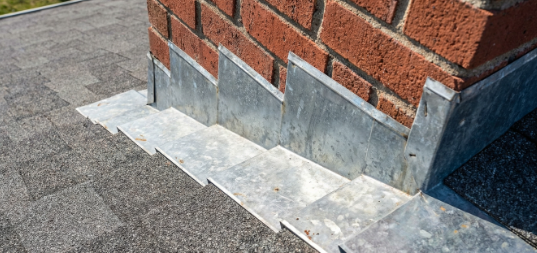
Chimneys, furnace and wood-stove flues, skylights, sidewalls, and valleys, rebuilt in 26-gauge galvanized or prefinished steel with kickout flashing added at roof-to-wall runs where the original builder skipped it. Freeze-thaw kills sealant here on roughly a 10-to-15-year clock, so we seal with cold-rated polyurethane (think NP1, not hardware-store silicone) that stays elastic through the winter swings.
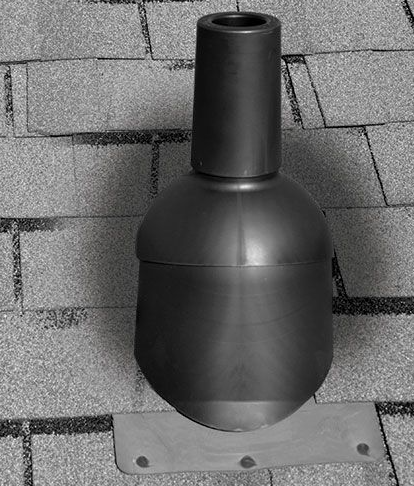
Pipe Boots & Vent Penetrations
A standard neoprene boot is rated for 10 to 15 years, and Cache Valley's UV-plus-hard-freeze cycle routinely beats that rating. When one splits, water runs straight down the pipe into a bathroom ceiling: cheap fix, common find, frequently misdiagnosed as a mystery leak. We replace them with silicone-collared or all-metal boots (Lifetime Tool, or a Perma-Boot retrofit over sound rubber) so the new boot outlasts the shingles around it.

Wind Damage Repair
Lifted and creased shingles, missing tabs, and peeled ridge caps after canyon gust events. A creased shingle has lost its seal for good even if it lays back down, and shingle adhesive strips won't re-seal themselves in weather below roughly 45 degrees, so cold-season wind repairs get hand-sealed rather than left to wait for spring. We color-match against the common fields in the valley's subdivisions, GAF Timberline and Owens Corning Duration chief among them.

Ice Dam Damage Repair
Once the dam is gone, the damage it left stays: soaked eave decking, torn underlayment, stained fascia and soffit. We rebuild eave edges with self-adhered membrane (Grace Ice & Water Shield or CertainTeed WinterGuard) run past the code line, which requires ice barrier to extend at least 24 inches inside the exterior wall line. We'll also tell you plainly when the real fix belongs in the attic instead. That's our ice dam removal service.

Emergency Tarp & Dry-In
Reinforced poly anchored to sound framing for the short term, or a peel-and-stick synthetic dry-in that buys weeks of protection when the permanent repair needs a weather window. Built to hold through the next storm cycle, not just overnight..

Common Roof Problems in Cache Valley
The repair list looks different depending on where in the valley you are, and we carry parts for all of it:
- Logan's historic blocks (the Center Street and Adams neighborhoods, the Island): steep pitches, old step flashing under layers, plank decking that needs matching, and chimneys that predate flashing standards by decades. Careful, surgical work rather than rip-and-replace.
- The benches (North Logan, Hyde Park, Providence): maximum wind exposure at the canyon mouths. Wind-lift repairs, ridge cap replacement, and fastener back-out are the standing orders up here.
- The newer subdivisions (Nibley, Millville, young streets everywhere): builder-grade boots and flashing failing years before the shingles around them. A $400 repair now defers a five-figure conversation for a decade.
- USU rental properties: we work between semesters when units are empty, document everything for the property file, and handle multi-unit walk-downs in one visit for landlords with several roofs.
What Roof Repairs Cost in Logan
Typical Cache Valley market ranges; estimates only. Your exact number comes from a free inspection: measured, photographed, and itemized.
Every repair estimate notes the condition of the rest of the roof while we're up there, so you know whether this is the last repair or the first of many. That's a judgment call we put in writing, with photos.
That matters most in April, when the melt reveals three months of damage at once and half the valley is deciding between a repair and a tear-off at the same time.
Every repair is either the last one or the first of many. A good estimate tells you which.
Our Roof Repair Process
01
Free Inspection
We find the entry point, not just the symptom: roof surface, flashing details, and the attic side where water shows its real path. Photographed and explained in plain language.
02
Straight Answer
Written estimate within 24–48 hours, including the honest read on whether this repair makes sense or whether you're two repairs away from a replacement conversation.
03
The Work
Most repairs are done in a single visit. We match materials to your existing roof and weather-schedule anything that needs open decking.
04
Proof It's Fixed
Before-and-after photos of the repair itself, not just the general area. If insurance is involved, the documentation is claim-ready.
Why St. George Homeowners Call Us for Repairs
Small jobs get answered
Most valley contractors chase tear-offs and let repair calls ring. Repairs are a core service for us, not leftovers, and the $300 boot swap gets the same scheduling respect as the $30,000 metal roof.
We fix causes, not stains
Chasing water to its entry point is slower than smearing sealant on the nearest suspect, and it's why our repairs don't come back next thaw.
Winter response, for real
Leaks don't check the calendar. We tarp, dry in, and repair through the cold months, and the emergency rate covers the emergency visit only. The permanent fix gets quoted at standard rates once the pressure's off.
Roof Repair Questions, Answered
Fix It While It's Still Small
The gap between a minor repair and a major one in this valley is usually one winter. Free estimate, photo documentation, straight answer.
Or Call: 801-880-2885